- Technological innovation is being incentivized around the world to reduce carbon dioxide emissions to help combat climate change and achieve the objectives of the Paris Agreement.
- Carbon capture, utilization, and storage (CCUS) is an emissions technology that involves capturing, transporting, and storing greenhouse gases back into the ground.
- There is a risk of CCUS being marketed as a “zero-emissions” solution with a wrong perception or misuse of the technology as a license to ramp up emissions.

CCUS Technologies - Can they mitigate climate change?
Environmental, Social & Governance (ESG) risk briefing | January 2022
As fossil fuels are likely to continue to play a role in the short and medium term of the energy industry, carbon neutrality would require rapid technological developments to bridge the gap until the next generation low-, zero-, or negative-carbon technologies are commercialized in the energy industry.
In 2005, the Intergovernmental Panel on Climate Change (IPCC) released a special report, where emission pathways were largely outlined and the potential of the Carbon Capture, Utilization, and Storage (CCUS) technology to mitigate climate change presented. In order to achieve the goal of the Paris Agreement and limiting global warming to 1.5°C, removal of large volumes of carbon dioxide (CO2) from the atmosphere would be needed to achieve net-zero emissions. As a result, the United Nations Economic Commission for Europe (UNECE) required all its participating countries to deploy zero carbon and negative carbon technologies to capture 90Gt of CO2 by 2050 to meet the objectives of the Paris Agreement and the 2030 Agenda for Sustainable Development.
What is Carbon Capture Technology?
Carbon Capture, Utilization, and storage (CCUS) is said to have the ability to unlock the full potential of decarbonization and attain carbon neutrality. It involves capturing, transporting, and storing greenhouse gas emissions from fossil fuel power stations, energy intensive industries, and gas fields by injecting the greenhouse gases emitted back into the soil or the ground. There are various use cases in CCUS technologies, but the main focus is on fossil fuel energy infrastructure and reducing the emissions at heavy emitting facilities. Deploying CCUS technologies at an emission heavy facility entails three major steps: capture, transportation, and storage.
There are several different methods that can be used to capture CO2 at the source (facility emitting CO2). They are divided into three categories: post-combustion carbon capture (most commonly used), pre-combustion carbon capture (used largely in industrial processes), and oxy-fuel combustion systems. The difference between post-combustion carbon capture and pre-combustion carbon capture is that CO2 is separated from the exhaust of a combustion process in the post-combustion category. For pre-combustion, the technology involves gasifying fuel and separating the CO2 out of the fuel. This option may be less costly compared to the post-combustion method, but it can only be built into new facilities, since retrofitting existing facilities for pre-combustion methods would be prohibitively costly. For oxy-fuel combustion, the combustion process is burned in a near pure-oxygen controlled environment, rather than the normal atmosphere, which will result in a more concentrated CO2 stream, thus making it easier to capture.

Process of capturing, transporting, and storing CO2 in CCUS technology. Source: IEA
Once the CO2 is captured, it is then compressed into fluid and then transported to a storage site that is appropriated for CO2 storage. This transportation process is usually done via pipelines, trains or ships and occasionally other vehicles are involved as well.
In the last step, the CO2 is injected into deep, underground geological formations, where it is then stored for a long period of time, rather than being released into the atmosphere. Storage sites for CO2 include former oil and gas reservoirs, deep saline formations, and coal beds.
Advantages of CCUS
According to the Grantham Institute at the London School of Economics, CCUS technology is, at present, the only carbon capture technology that can reduce emissions at emission facilities. Some of the advantages that CCUS present are:
- CCUS can reduce emissions at the source: The ability of CCUS to directly capture CO2rom the source and then store it in geological formations is estimated to reduce as much as 20% of total CO2 emissions from industrial and energy production facilities.
- Other pollutants can be removed at the same time: During the oxy-fuel combustion, the fuel is burned in an oxygen concentrated environment, which can lead to a significant reduction of nitrogen oxide (NOx) and sulfur dioxide gases. A study conducted by the Argonne National Laboratory showed a 50% decrease in NOx gases in oxy-fuel combustion.
- The social cost of carbon can be reduced: During the oxy-fuel combustion, the fuel is burned in an oxygen concentrated environment, which can lead to a significant reduction of nitrogen oxide (NOx) and sulfur dioxide gases. Carbon social cost is a dollar value of the estimated costs and benefits to society from climate change caused by one additional metric ton of CO2 released into the atmosphere in a year. By removing CO2 directly at the source, net damages to society could be reduced.
Disadvantages of CCUS
Despite the benefit that CCUS can help with emission reduction by reducing the amount of CO2 emitted into the atmosphere, there are several issues related to the technology and its implementation that still need to be addressed. These disadvantages are:
- The high cost of implementation: There are currently no regulatory drivers in most places to incentivize or require the use of CCUS. The use of this technology requires significant investment into its requirement of high cost of equipment and materials to store CO2, and to build an infrastructure to transport and then store it, could pose significantly high costs.
- License to ramp up emissions: CCUS technology can be perceived in a wrong direction and be used by emission heavy industries to push for the regular use of CCUS while maintaining polluting projects, thus defeating the true purpose of CCUS. This point is often used by NGOs in criticisms of the practice.
- Storage capacity for CO2 is uncertain: The availability of geological storage is not considered a barrier in the short to medium term. However, there are uncertainties with regards to the long-term ability of storage sites to sequester carbon without significant leakage. There is some potential for seismic activity caused by underground injection of CO2. Furthermore, it is also estimated that not all countries will have enough CO2 storage capacity to properly implement CCUS.
- Transportation considerations: While the risk of accidents during transportation is relatively low, the potential for leaks still exists. Transportation of CO2 to the storage sites is also very costly, since significant energy is required to compress the CO2nd maintain high pressure throughout the pipelines, which are expensive themselves. Potential leakage in high concentration can also cause problems for human health. Each CO2 source must be connected to an appropriate storage site via pipeline, which can make CCUS implementation more difficult and expensive on areas that have no geological formations suitable for storage.
- Uncertain public support: The public has also a critical perception of the widespread implementation of CCUS. According to a study done by Align CCUS Eu, public awareness of CCUS in the world is considered as lacking. The public is uncertain about CCUS, what it entails, and has a negative perception towards it. People tend to reject large infrastructure like CCUS being built near them because of the perceived risks outlined above.

Rationale and reality check surrounding CCUS Technology
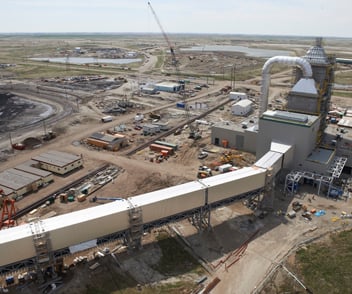
Boundary Dam CCS Project in Saskatchewan, Canada. This is the world’s first major power plant CCS scheme. Source: Carbonbrief.org
The inclusion of CCUS has been widely discussed in the Clean Development Mechanism (CDM) by the United Nations since the publication of the technology by the Intergovernmental Panel on Climate Change (IPCC) in 2005. Since the beginning, CCUS has been seen as a technology that is “young” (i.e. requires more research) and controversial. The capture process has some risks associated to the storage of CO2 under the earth. Pipes can break or leak during the transportation to the storage sites due to the high pressure applied to liquify CO2. Natural degasification of the storage site has been observed in the past, such as the gas release of the natural deposit in Lake Nyos in Cameroon in 1986, whereby large amounts of CO2 stored under the lake were suddenly liberated due to environmental conditions. The natural disaster led to the release of about 100,000 to 300,000 tons of CO2 and killed 1,746 people and 3,5000 livestock. Given these risks, many stakeholders have called for increased expertise, research, and knowledge for the safe implementation of the technology, such as efficient pressure monitoring and above ground CO2 detectors, which are commonly used.
Given the Lake Nyos incident, assessment criteria for the selection of a site for a CCUS plan must be further clarified. Some countries, such as Norway, have expressed their opposition in burying the captured CO2 under marine soil. Further standards for the management of the site must also be discussed, since carbon storage plants need to be monitored for the long term, a tight control, and verification process of these plants must be carried out.
Risk management surrounding CCUS technology or plants is also a crucial aspect in the implementation of the technology. Regulatory bodies must be set up in order to give guidance as to who is liable should an industrial accident occur and how to manage the risks that arise from them. Furthermore, a legal framework for CCUS projects can aid in its implementation by outlining how it should be developed, either on a national level or by international entities in its entirety. Vast investments are also needed to establish the fundamental infrastructure for CCUS technology, due to the high costs associated with it. It is estimated that if it costs $1.5 billion to build a power plant, it will cost an additional $7,000,000 just to build the adapted capture equipment. This would impact the consumer, which might not be ready to incur a higher cost. In order to have higher implementation of the CCUS technology, carbon credits or carbon emission reductions (CERs) may aid in the reduction of the cost incurred in developing countries, giving incentives for Annex 1 countries to finance them.
Furthermore, CCUS technology may have a limited impact on climate change mitigation. Despite knowing that CCUS has the ability to limit the emission of CO2 in the atmosphere, it has also been heavily debated for not reducing the emissions of CO2 by the carbon intensive industries in general. Some concerned parties also state implementing CCUS technology can hinder the development of greener and “zero-emissions” technologies, thus contradicting the principles of the CDM and the Kyoto Protocol.
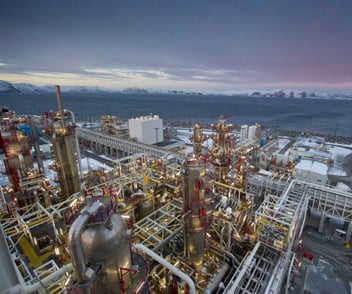
The Snøhvit project captures carbon dioxide at an offshore gas processing facility in the Barents sea, Norway. Source: Carbonbrief.org
Conclusion
In order to achieve the goals of the Paris Agreement, a transition to a low carbon economy is essential to combat climate change. Technological innovation is one of the ways to achieve this, therefore, CCUS technology can be used as one pioneering technology to bridge the gap until the next generation low-, zero-, or negative-carbon technologies are available. However, CCUS technology and its implementation faces geographical, environmental, social, and political challenges. A sustainable approach is needed to look beyond the future, identify key risks and mitigations to the challenges identified for a feasible use of CCUS technology.
Insurance services play an essential role in energy transition and emerging technologies. Allianz has developed and implemented the
ESG Integration Framework across its portfolio to review ESG risks in its business transactions, including new technologies which remove emissions from the atmosphere. The framework contains the ESG sensitive business guidelines which can also be applicable to emerging technologies such as CCUS Technology, as well as its possible accompanying risks.
Allianz Global Corporate and Specialty (AGCS), the industrial insurance arm of the Allianz Group, supports this effort at the ESG Business Services, the Center of Competence for ESG Business. A team of experts reviews all business transactions that have potential ESG or reputational risks. This allows for both informed decisions and recommendations for mitigation to be made in order to reduce the ESG and reputation risk associated with the transaction.
References
Carbon Capture, Use and Storage (CCUS) by UNECE, https://unece.org/sustainable-energy/cleaner-electricity-systems/carbon-capture-use-and-storage-ccus
Climate council, https://www.climatecouncil.org.au/resources/what-is-carbon-capture-and-storage/
Resources for the Future, https://www.rff.org/publications/explainers/carbon-capture-and-storage-101/
Treehugger, https://www.treehugger.com/carbon-capture-and-storage-ccs-pros-and-cons-5120005
IEA, https://www.iea.org/reports/the-role-of-co2-storage
Oxy-fuel combustion technology for coal-fired power generation, https://www.sciencedirect.com/science/article/abs/pii/S0360128505000225?via%3Dihub
GTSP, Carbon Dioxide Capture and Geologic Storage, https://www.epa.gov/sites/default/files/2015-05/documents/act_2007_02_battelle.pdf
2005 IPCC Report, https://www.ipcc.ch/report/carbon-dioxide-capture-and-storage/
Align CCUS EU, https://www.sciencedirect.com/science/article/pii/S1750583620305533#!
Norway Store Carbon Dioxide at Sea, https://www.npr.org/templates/story/story.php?storyId=17332408
Climate council, https://www.climatecouncil.org.au/resources/what-is-carbon-capture-and-storage/
Resources for the Future, https://www.rff.org/publications/explainers/carbon-capture-and-storage-101/
Treehugger, https://www.treehugger.com/carbon-capture-and-storage-ccs-pros-and-cons-5120005
IEA, https://www.iea.org/reports/the-role-of-co2-storage
Oxy-fuel combustion technology for coal-fired power generation, https://www.sciencedirect.com/science/article/abs/pii/S0360128505000225?via%3Dihub
GTSP, Carbon Dioxide Capture and Geologic Storage, https://www.epa.gov/sites/default/files/2015-05/documents/act_2007_02_battelle.pdf
2005 IPCC Report, https://www.ipcc.ch/report/carbon-dioxide-capture-and-storage/
Align CCUS EU, https://www.sciencedirect.com/science/article/pii/S1750583620305533#!
Norway Store Carbon Dioxide at Sea, https://www.npr.org/templates/story/story.php?storyId=17332408
Author
Willie Koh, Junior ESG Business Analyst
ESG at AGCS
We seize environmental, social and governance (ESG) risks and embed responsible business practices across our company. For any insurance business transactions, we consider the ESG risks associated with such transactions.
More Environmental, Social & Governance (ESG) risk briefings















Sign up to the newsletter
Keep up to date on all news and insights from Allianz Commercial