
While new and emerging risks grab the headlines with their novelty, many of the most acute dangers on your site could be the result of human error or poor procedures. Here are seven hazards you could be overlooking in your factory, industrial site, warehouse, or distribution center.
7 hidden hazards in traditional facilities
Expert risk article | June 2024
1. Smartphone distractions
While smartphones can enhance workplace safety in many contexts, they can also eat into attention spans, causing delays in reaction times when quick thinking is of the essence.
“Smartphones can reduce situational awareness when a delay of only seconds in tackling a malfunction or hazardous situation could make a difference to any subsequent damage or business interruption, not to mention the impact on human life,” says Ryan Du, Risk Consulting Manager, Property, Asia Pacific, at Allianz Commercial. “If an employee tasked with monitoring an alarm panel takes their eye off the ball because they’re focused on their phone, they might miss a vital visual cue or audible warning from an automated system. I’ve even heard of operators silencing alarm systems so they can play games on their phones.”
Smartphone distraction is no longer a phenomenon largely confined to younger people, says Du, who observes phone use growing on-site during working hours among older age groups when he carries out inspections for risk assessments. “Smartphones are increasingly visible – in the hands of receptionists at front desks, security guards inside guardhouses, chefs in kitchens, machinery operators, or staff on their way to the canteen for lunch. So, as well as the potential to undermine safety procedures by causing distractions, phone use can heighten slip, trip, and fall risks.”
Large industrial plants can be hazardous environments, with many moving parts, including vehicles and heavy machinery, so employees walking around the premises with their eyes on a phone could be subject to the same risks from on-site traffic as they would be on a busy street.
Jude Cross, Regional Head of Property, Asia Pacific, at Allianz Commercial, says: “Cellphones have been around for years, but businesses haven’t always taken into account how our usage of them has changed as technology advances and the lines blur between work and ‘life’. Risk managers would do well to check the extent and scope of their cellphone policy, particularly with high-hazard activities, and consider how to update these if necessary.”
2. The proliferation of personal devices
Along with smartphones, employees are using a growing number of personal electronic devices in the workplace. “I’ve seen hand-warmers, tabletop fans, and battery-powered mugs around industrial facilities and warehouses,” says Du. “These usually contain lithium-ion [li-ion] batteries that require charging. In addition, employees often use a laptop or tablet, which they might leave charging on a desk overnight.”
If incorrectly handled, charged, stored, or transported, the potential hazards from li-ion battery incidents can be fire, explosion, and ‘thermal runaway’ – a rapid self-heating fire that can cause an explosion. They can also produce irritating, corrosive, or poisonous gases that can cause an explosion in a confined space. While the dangers of li-ion batteries have been well documented and implicated in serious fires involving electric vehicles on board car carriers, attention should also be paid to their risks with personal devices.
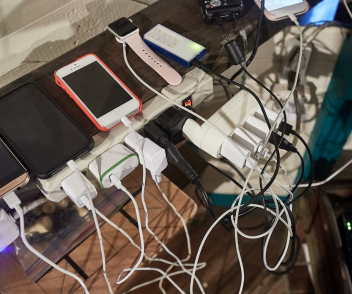
Photo: Gudellaphoto / Adobe Stock
“Inappropriate or unmanaged charging can present a fire risk, particularly in environments that are already combustible,” says Du. “We recommend training employees about the hazards associated with battery charging, along with installing physical protection, such as overcurrent protection, overloading protection at the power supply side, and suitable fire detection and protection for expected risks.”
E-cigarettes also contain li-ion batteries and if they are not properly disposed of can pose a fire risk. “Unlike smoking, there tend to be fewer signs of vaping in a workplace, such as discarded butts, matches or packaging,” says Du. “Vaping is not as serious a fire risk as smoking, but it should still be considered a potential hazard.”
Cross adds: “Personal devices might be small, but the output of their batteries has been getting higher in recent years. When you consider the volume of devices now in common use, they collectively represent a significant increase in a company’s exposure to fire or explosion.”
3. E-vehicles parking on your site
Commuters seeking to avoid urban congestion or cut emissions have increasingly turned to alternative modes of transport, including electric cars, e-bikes, and e-scooters. E-scooters have become a common feature of the urban landscape in many countries, while the take-up of electric cars is incentivized by some governments to help meet their net-zero goals.
But, like personal devices, e-vehicles contain li-ion batteries, so they must be carefully considered in any fire risk assessment if they are used, stored, or parked on an industrial site. The London Fire Brigade has warned that e-bikes and e-scooters remain the UK capital’s fastest growing fire risk, saying there was a 78% increase in e-bike fires in 2023. [1] A fatal fire in eastern China, thought to be sparked by an e-bike, killed 15 people in a residential block in February (2024). [2]
“We had a client who wanted to park electric cars inside a facility,” says Cross. “That would present a significant fire risk, particularly if cars are parked close together, as we know the nature of these fires can be to spread rapidly and fiercely. Sometimes e-vehicles can present an incidental risk – say a senior member of the team drives their car to the factory and wants to park it on site, or employees occasionally use their personal e-bikes to get to the plant, or travel around it, and fire safety policies are either inadequate or not adhered to.
“Mitigation measures should include training and education of staff about the risks, the provision of safe storage and charging facilities – preferably in an external location – and regularly updated risk assessments and e-vehicle policies,” Cross advises. “A comprehensive risk assessment should be carried out by professional fire safety engineers before any ad-hoc parking of EVs is introduced, or whenever the location or nature of this facility changes, with strict adherence to relevant protection and mitigation policies.”
4. Improperly stored industrial batteries

Photo: Dekliyngkaea / Adobe Stock
Batteries have a wide range of use cases in industrial facilities, warehouses, and distribution centers. Different battery technologies, including li-ion and lead-acid, can power material handling equipment such as forklifts, as well as industrial cleaning machines and mobile robots.
“These technologies will have various technical specifications and be subject to different safety regulations, but with their increased use, we have seen incidences of neglect when it comes to their safe usage, handling, and storage,” says Du.
A number of studies indicate the higher a battery’s state of charge (SOC), the more reactive it is in a fire, so li-ion batteries require special handling and storage. Du recommends the SOC does not exceed 60% for safe storage, transport, and handling.
“We believe the SOC risk is underestimated in many facilities,” says Du. “We have seen batteries being stored against safety advice, such as on high, rather than low, racks, and mixed with other, potentially flammable, items without adequate space or the use of storage boxes. Educating staff about batteries’ SOC should be a priority, as well as implementing emergency response plans that are assessed and practised regularly.”
5. Neglected electrical maintenance
“There has been a lot of attention paid recently to emerging risks that make the headlines, such as Artificial Intelligence (AI) and cybercrime,” says Cross. “Yet, fire and explosion is still the most frequent driver of business interruption claims, despite improvements in risk management and fire prevention.” It ranks second by value of claims after natural catastrophes, accounting for 36%, followed by machinery breakdown and equipment damage (7%), and faulty workmanship and maintenance (5%), according to Allianz Commercial claims analysis. [3]
“These statistics illustrate starkly the continued importance of rigorous electrical and equipment maintenance,” Cross continues. “Claims for fire losses have increased in severity because of factors such as higher property and asset values, while costs associated with the impact of business interruption following the aftermath of a fire can significantly add to the final loss total, given the time it can take to get production back up and running at a large manufacturing plant.”
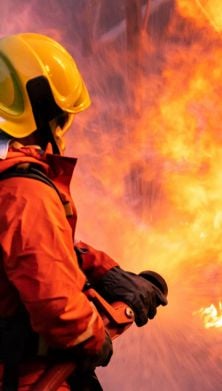
Fire/explosion is the largest single identified cause of all business insurance losses and has resulted in more than €18bn worth of insurance claims over a five-year period, according to Allianz Commercial analysis. Even the average claim totals around €1.5mn [4].
Photo: Eakrin / Adobe Stock
6. Poor housekeeping
Basic housekeeping practices are also in danger of being neglected, says Cross. “Poor housekeeping is often a reflection of a poor loss prevention culture. Housekeeping requires ongoing attention, including to the design and layout of premises, waste management, signage, and storage of tools and hazardous materials. Mopping up oil spills, disposing of rags properly, removing slip and fall hazards, and keeping working areas clean and tidy sounds like basic advice, but we’ve seen signs of this being neglected in some facilities, particularly since the Covid pandemic.”
Some businesses could still be grappling with the knock-on effects of the pandemic on production and supply chains, Cross suggests, or they might be struggling to recruit maintenance and cleaning staff. Sometimes routines can become so embedded they are not questioned even if circumstances change. So it is worth remembering that the often overlooked, ad-hoc hazards associated with poor housekeeping can ultimately result in personal injury claims, or material damage and business interruption losses from fire.
7. Language barriers
In a globalized world, workers in larger companies could speak many different mother tongues. This might not pose a problem for day-to-day conversation, but in emergency situations when swift action is needed, language barriers can result in delayed responses or the misinterpretation of safety procedures.
“If essential information is not clearly communicated or understood, there can be serious consequences,” says Du. “Often we see inconsistencies in the languages used on site. Local verbal communication might be in one language, but signage on equipment such as alarm panels might be in another. We had one manufacturing client who operated a lot of Chinese equipment, with Chinese instructions, but the local workers were Vietnamese and couldn’t understand it.
“Instructions are not always adequately translated either,” Du continues. “Or, when the master instructions are updated by head office, they sometimes forget to update the local language versions in different territories.”
Misunderstandings can also when arise when a third language – often English – is used as a lingua franca.
Du emphasizes the importance of good communication, such as clarity, simplicity, and strong visuals, along with workplace training in a local language, including regular refresher training and practical drills.
Top 10 global causes of loss by value of claims
Source: Allianz Commercial. Based on analysis of 534,456 business insurance claims between January 1, 2017, and December 31, 2021, worth approximately €88.7bn in value. “Other” causes of loss account for 26% of the value of all claims. Claims total includes the share of other insurers in addition to Allianz Commercial.
* professional indemnity claims
This article is taken from the latest edition of Allianz Commercial's biannual client publication, Global Risk Dialogue, which features a number of insights on risk management and insurance topics around the world.
For more information
References
[1] BBC News, E-bikes London’s fastest growing fire risk, says fire service, February 11, 2024
[2] CNN, At least 15 killed in fire thought to have been started by electric bicycle in eastern China, February 24, 2024
[3] Allianz Commercial, Business interruption claims trends, November 2023
[4] Allianz Commercial, Fire, natural catastrophes and faulty workmanship top causes of insurance claims for business: Allianz, July 19, 2022
Stage photo: oldwar / Adobe Stock
Our experts


All the latest news, reports and hot topics














Sign up to the newsletter
Keep up to date on all news and insights from Allianz Commercial