
Article | October 2026

Weathering what’s next: how parametric insurance can support climate resilience
By paying out according to pre-agreed thresholds or events, parametric solutions can help close protection gaps and provide rapid financial support as communities and businesses adapt to the impacts of climate change, including the devastation caused by drought, excess rainfall and flooding.
- Parametric insurance provides pre-agreed payouts when specified triggers are met, enabling faster access to funds without traditional loss adjustment.
- It can complement existing protection by addressing exposures such as non-damage business interruption, weather-related revenue losses, prevention and mitigation costs.
- Parametric insurance is one of several insurance tools being used in emerging markets to support underserved and climate-vulnerable communities.
- Reliable data, public-private partnerships, wider resilience measures, and support for affordability could help parametric insurance reach its potential.
Why is parametric insurance moving into the spotlight?
Climate change continues to hit headlines and break global records. August 2026 was the joint-hottest month ever recorded (tying with July 2023), sea surface temperatures reached new highs, and concern is mounting that a strengthening El Niño could increase the risk of extreme weather events into 2027. Wildfire activity also reached exceptionally high levels in 2026.
Extreme heat is emerging as a material economic risk. Allianz Research estimates [1] that under a sustained heat scenario, cumulative GDP losses between 2026 and 2030 could reach US$354bn in Japan, $240bn in France, $147bn in Italy and $131bn in Germany, among the most exposed economies.
It’s no surprise climate risk is high on the corporate agenda, ranking sixth in the Allianz Risk Barometer 2026, with companies citing business interruption as their leading climate-related concern, followed by acute physical damage.
Yet, despite global insured losses from natural catastrophes reaching $127bn in 2025, [2] around 60% of all disaster losses are uninsured [3]. As climate volatility increases and some losses remain difficult to insure, parametric insurance is attracting attention for its ability to pay claims based on predefined triggers rather than traditional loss adjustment, enabling faster payouts to affected communities, businesses and governments, particularly in locations where on-the-ground assessment is impractical and for which there is an increasing availability of climate data.
How do parametric policies work in practice?
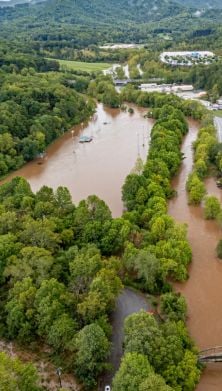
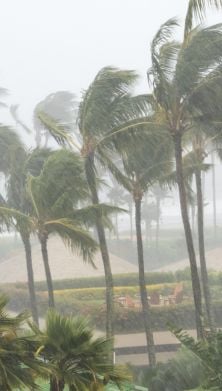
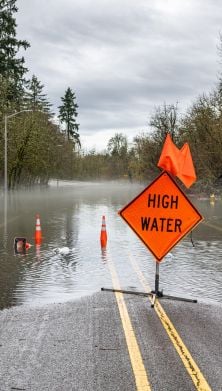
Unlike traditional indemnity insurance, which pays claims based on the actual loss suffered, parametric insurance is a form of alternative risk transfer (ART) that pays a pre-agreed amount when a specific event occurs, or an agreed threshold is reached. Triggers are often linked to weather or natural catastrophes, such as cyclones, low wind or lack of sunlight, high temperatures or wind speeds, heavy rainfall, flooding, drought and wildfire. In practice, a parametric payout could enable a charity to receive funds shortly after a catastrophic flood to support its relief efforts, or a wind farm could be compensated during a prolonged spell of low wind generation.
The data used for a parametric policy is gathered remotely, using satellite data, information from national weather services, or on-the-ground sensors. Satellite imagery can identify heat anomalies associated with wildfires, for example, while sensors on buildings can monitor rising water levels, and river flow gauges can measure how much water enters a hydropower plant.
“Capturing data this way removes the need for insurers to make verification field visits, which saves time and money,” explains Lara Martiner, Global Head of Alternative Risk Transfer at Allianz Commercial. “In the case of a loss event, the product gives the insured, who could be farmers in remote rural communities, faster access to capital because there is no need for a loss adjuster to visit in person.”
Parametric insurance can complement traditional indemnity cover, providing an extra layer of protection against adverse weather events. If the relevant trigger is met, the policyholder receives a pre-agreed payout quickly, enabling them to respond and put actions in place to limit loss deterioration where possible.
What protection gaps can parametric solutions support?
Parametric insurance can address exposures such as non-damage business interruption, weather-related revenue losses, prevention and mitigation costs, and other risks for which conventional appetite can be limited to a handful of niche markets, or where payment speed and transparency are key to the insured. In some cases, government subsidies and support may be needed to address affordability issues. Parametric policies can be integrated into broader structured risk programs or purchased as standalone cover.
“There is still a substantial gap between the losses caused by natural catastrophes and the losses that are actually insured. Parametric insurance can help address that challenge, particularly in vulnerable countries where disasters often have far-reaching humanitarian and economic consequences,” says Martiner. “As extreme weather becomes more common and more intense in many parts of the world, these solutions can help strengthen resilience and speed recovery by offering faster access to funding.”
How is parametric cover supporting climate resilience in vulnerable communities?
Parametric insurance is one of several insurance tools being used in emerging markets to support underserved and climate-vulnerable communities, with the aim of providing faster payouts, transparency and a more straightforward claims process.
Common applications include sovereign risk pools, agricultural index products, and humanitarian financing mechanisms, which focus on rapid liquidity and closing protection gaps.
Parametric triggers vary based on the particular risks faced by different regions. In the Caribbean, the focus might be on protection from excess rainfall, tropical cyclones and earthquakes, while in Africa, cover might emphasize drought and flood risks.
“With its reliance on weather conditions, agriculture has been an early adopter of parametric insurance in many developing nations, with cover often triggered by drought, rainfall or flood conditions,” says Nishma Tate, Head of Global Business Development, Alternative Risk Transfer, at Allianz Commercial.
Tate adds that interest in parametric solutions is growing as organizations seek protection against low-probability but potentially high-impact events, such as severe weather and natural catastrophes. It is increasingly being explored as a tool to support climate resilience and adaptation in humanitarian and disaster relief.
“Parametric insurance is not appropriate for every situation,” says Tate. “Parametric products carry basis risk – the possibility that a payout does not match the actual loss experienced. Trigger design, data quality, and access to reliable indices are all factors that determine whether a parametric approach is suitable.”
What will it take for parametric insurance to reach its full potential?
One of the most pressing issues is access to reliable data. Parametric solutions depend on independent historical datasets for modeling and near real-time data to determine when a payout should be triggered. Investments in weather stations, satellite monitoring and data infrastructure can support product development by improving accuracy and reducing basis risk.
Public-private partnerships (PPPs) could also be key for certain sectors. Regional risk pools, for example, allow countries to pool exposures and access pre-arranged disaster financing, sometimes supported by governments, donor funding and private-sector underwriting expertise. Established examples include the Caribbean’s Catastrophe Risk Insurance Facility Segregated Portfolio Company (CCRIF SPC), the Pacific Catastrophe Risk Insurance Company (PCRIC) and African Risk Capacity (ARC), which provide rapid access to funding following events such as tropical cyclones, droughts, earthquakes and extreme rainfall.
Parametric insurance also tends to work best as part of a wider resilience strategy. Investment in risk reduction and adaptation measures, such as flood defences, climate-resilient infrastructure, early warning systems, and coastal protection including mangroves can help reduce losses, improve insurability and increase the availability of cover.
“There is a role for governments, development institutions and the private sector in improving affordability and access. In some emerging markets, targeted government support, premium subsidies and blended finance structures may be needed initially to support insurance penetration and affordability, helping commercial parametric solutions to become viable,” says Martiner. These mechanisms can include loss-participation, premium support and technical assistance from donors and development partners, helping to de-risk portfolios and improve affordability, making solutions more viable for commercial providers.
How is Allianz Commercial developing its approach to parametric solutions?
Allianz Commercial ART is currently focusing its parametric efforts on supporting resilience and adaptation in emerging markets, particularly organizations providing humanitarian and disaster relief. Example use cases for parametric solutions could include providing flood response cover for a government agency, supporting food security programs, and offering cyclone protection to humanitarian charities.
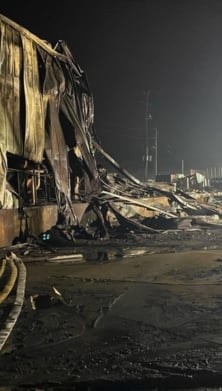
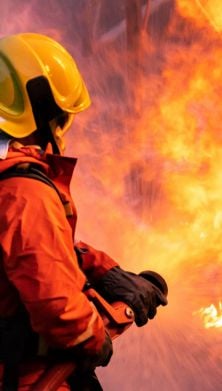
As climate change intensifies, drought is becoming increasingly challenging in both the developing and developed world. Wildfires are another growing concern globally. This year, several European countries recorded more than double their average number of fires for July, [4] including Ireland and the UK, which are not traditionally associated with severe wildfire risk. In August, millions of people across England and Wales received a wildfire emergency alert on their phones – the first nationwide use of the alert system for wildfire risk.
“As climate-related events affect places that were once considered lower risk, clients are reassessing their exposures and exploring new approaches to risk management, including their insurance cover,” says Keziah Baskerville-Muscutt, Senior Underwriter, Sustainability, Alternative Risk Transfer, at Allianz Commercial. “The impacts of a wildfire, for example, can extend far beyond direct physical damage, resulting in business interruption losses arising from road closures, access restrictions and power outages. Clients are raising the issue of wildfire with us more frequently as they assess the potential impact on their operations, assets and business continuity.”
While parametric insurance has gained momentum in recent years, unlocking its full potential will require continued innovation, collaboration and investment across the public and private sectors, as well as greater client confidence in managing basis risk.
Climate change is altering the risk landscape, requiring new approaches to risk transfer and recovery, says Baskerville-Muscutt: “As recent weather events have illustrated, insurers must continue to flex their creative muscle, developing innovative solutions that provide the protection businesses and vulnerable communities need to withstand the brutal realities of climate change. Evolving our parametric offering is one way to reinforce our first line of defence against increasingly erratic weather patterns and the disruption and destruction they can unleash.”
References
[1] Allianz Research, Too hot to grow: the economic costs of extreme heat, May 28, 2026
[2] Aon, 2026 Climate and Catastrophe Insight, January 2026
[3] Munich Re, Lower losses, growing risks: the natural disaster review for the first half of 2026, July 30, 2026
[4] WTW, Are the 2026 global wildfires correlated? July 31, 2026



All the latest news, reports and hot topics








Sign up to the newsletter
Keep up to date on all news and insights from Allianz Commercial