
Article | January 2026
Allianz Risk Barometer 2026 -
Global risk #7: Political risks and violence (15%)
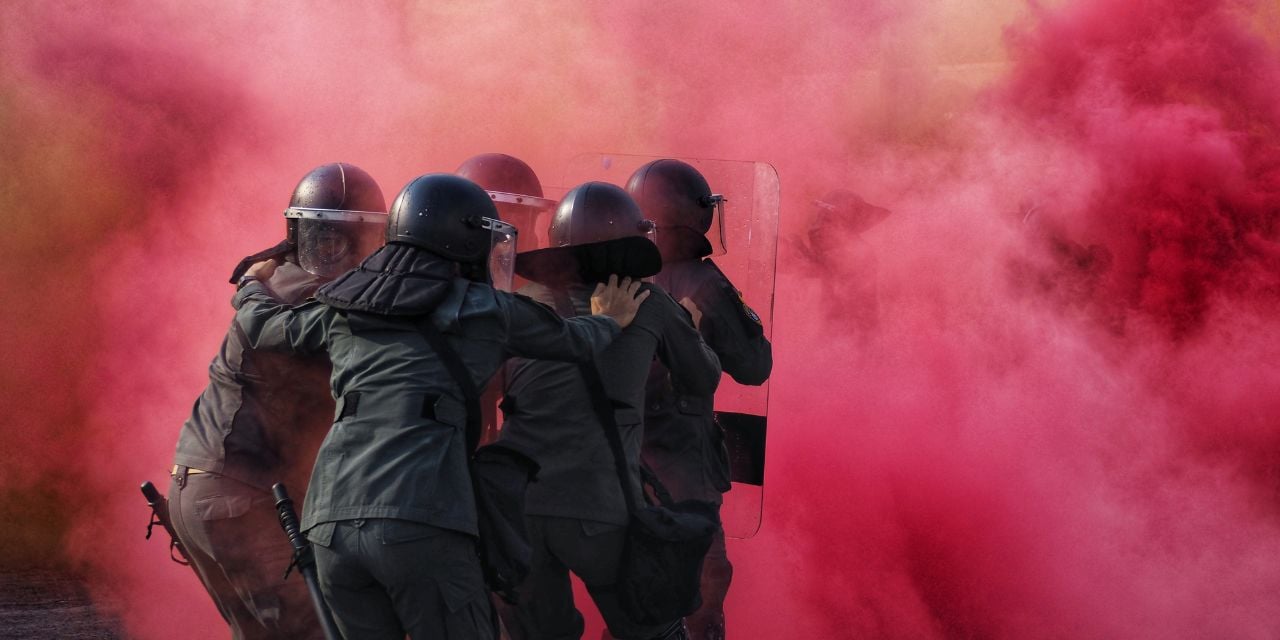
Political risks and violence rises to its highest ever position globally at #7. Unsurprisingly, war is the peril companies are most worried about, followed by civil unrest, terrorism, and government intervention.
This article is part of the overview of the most important business risks in 2026, according to the Allianz Risk Barometer 2026.
The concerns of clients and partners, large and small, for the year ahead are clear
War perils are a big fear in 2026, according to Allianz Risk Barometer respondents with 53% of the votes (up from 48% in 2025), closely followed by civil unrest threats, which have dominated conversations over the past 24 months (49%). Terrorism and sabotage ranks #3 in the political risks and violence section of the survey (46%).
“When you look through the rearview mirror it is easy to see why the war peril has risen to this high, as well as why the percentage of the vote has increased over the last 12 months,” says Srdjan Todorovic, Global Head of Political Violence and Hostile Environment Solutions at Allianz Commercial. “Reflecting on 2025, we have seen a level of political global turbulence and interstate skirmishes which we haven’t seen for decades – a trend which continues in 2026 with the US intervention in Venezuela.”
The 12-day war between Iran and Israel, and subsequent US involvement, during 2025 was particularly significant. It shifted red lines and boundaries in the Middle East from proxy wars to direct state conflict. It also served as a launch pad for a more bolshy US stance in other regions, including towards Venezuela, where it later removed president Nicolás Maduro.
Overview
Political risks and violence (e.g., war, political instability, terrorism, polarization, coup d’état, civil unrest, strikes, riots, looting)
Ranking history:
- 2026: rank 7
- 2025: rank 9
- 2024: rank 8
- 2023: rank 10
- 2022: rank 13
- 2021: rank 10
Beyond the Middle East, there were also open hostilities in Africa and Asia – between Rwanda- backed rebel group (M23) and DR Congo; India and Pakistan; and Thailand and Cambodia for example. Meanwhile, existing static conflicts in Sudan and Ethiopia reached new and deadly levels.
Tensions between Serbia and Kosovo escalated, albeit they were quickly dampened by US intervention. However, potential new problems are being noted and monitored in Mozambique and Tanzania. Although these have been deadly, the scale of issues is relatively localized, for now.
It is little surprise then that business assets have seen a 22% jump in exposure to conflict areas, following an almost 90% rise in areas affected by armed fighting over the last five years (which now covers almost 5% of the inhabited world), according to Verisk Maplecroft [1].
Which risks are your company most worried about?
Top 5 responses
Source: Allianz Risk Barometer 2026. Respondents: 496. Figures represent how often a risk was selected as a percentage of all responses. Figures don’t add up to 100% as up to three risks could be selected.
Looking beyond war perils, the risk of terrorism, and especially sabotage, has increased sharply over the last 12 to 18 months. On top of the tragic recent attacks on Jewish communities in Manchester, UK and Bondi Beach, Australia, we have seen a rise in grey-zone sabotage attacks across Europe in recent years, with Associated Press [2] reporting 145 incidents in Europe alone. Most are attributed to Russian-state sponsored actors with the aim of undermining local governments and populations. Although these acts have caused little actual damage, they have resulted in a big allocation of security resources to policing and monitoring key infrastructure, with Poland recently deploying 10,000 troops [3] to protect its own, for example. Further resources have been allocated by NATO and European partners to enhance maritime security and key offshore infrastructure such as energy assets and telecommunication cables.
“This is before you factor in how much time and money has already been spent in the private sector on enhancing physical and cyber security at their own sites,” says Todorovic.
Meanwhile, 2026 also began with German left wing militants protesting over climate change and artificial intelligence (AI) claiming responsibility for an arson attack that cut power to tens of thousands of households in Berlin [4]. This was the latest in a number of power sabotage incidents in Germany, raising concerns about the risk of an increase in extreme environmental activism in Europe, given the rowing back of net zero targets and perceived slow political progress.
“Shifting global alliances and economic realignment; war in Ukraine; tariff wars; rising xenophobia and anti-immigration protests in Europe; decreasing trust in governments; and the deepening economic crisis globally – it is not hard to see why political risk and violence perils have risen sharply over the last 12 months and are front of mind for risk industry professionals. Businesses need to hope for the best but make sure they are prepared for the worst,” says Todorovic.
Which particular impact concerns your company most?
Top 4 responses
Source: Allianz Risk Barometer 2026. Respondents: 496. Figures represent how often a risk was selected as a percentage of all responses. Figures don’t add up to 100% as up to three risks could be selected.
References
[1] Verisk Maplecroft, Global conflict zones nearly double since 2021, rising to 6.6 million km², November 20, 2025
[2] Associated Press, Russia wants to drain Europe’s investigative resources with its sabotage campaign, officials say, December 18, 2025
[3] Reuters, Poland to deploy 10,000 soldiers to protect infrastructure, November 19, 2025
[4] The Guardian, Letwing militants claims responsibility for arson attack on Berlin power grid, January 4, 2026
Photo: Shutterstock
Our experts

All the latest news, reports and hot topics








Sign up to the newsletter
Keep up to date on all news and insights from Allianz Commercial