
In many parts of the world, infrastructure assets like roads, bridges, railways, and pipelines are nearing the end of their life cycle or are facing challenges resulting from underinvestment, inadequate maintenance, the changing climate, or the new demands of modern society. Now is the time to prioritize their upkeep to safeguard people and property.
Infrastructure assets: accidents waiting to happen?
Expert risk article | June 2024
The 1 minute dialogue
- In many parts of the world, infrastructure assets are reaching the end of their life cycle and the liability risks associated with them are intensifying.
- The threat is most prominent in countries that have undergone a prolonged economic crisis.
- Pressure on assets is coming from new technology, urbanization, change of land use, and climate change.
- Robust project management is key to mitigating risk, particularly as infrastructure projects often involve multiple parties.
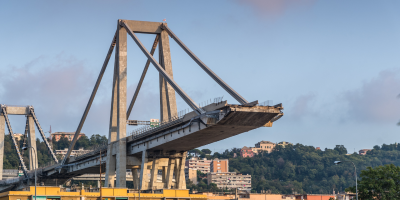
The Morandi Bridge in Genoa, Italy, was regarded as a beacon of ingenuity and innovation when it opened in 1967. Forming part of an important highway between France and Italy, the cable-stayed bridge became a local landmark, soaring over the city to cross the Polcevera River.
Its collapse in 2018 left 43 people dead. Yet years before the tragedy occurred, concerns had been raised about the structure’s integrity and maintenance record, including warnings about corrosion risk from Riccardo Morandi himself, the engineer who designed the bridge.
Calamitous incidents like the Morandi Bridge collapse inevitably make headline news. But, increasingly, tragedies like these are no longer regarded as such isolated incidents. Around the world, infrastructure assets once heralded as modern marvels are reaching the end of their life cycle, and the liability risks associated with ageing bridges, roads, railways, tunnels, and pipelines are intensifying.
Personal injury and corporate manslaughter claims, property damage, and loss of reputation, as well as contractual disputes, could all arise from infrastructure failures.
“The threat to infrastructure is most prominent in those countries that have been through a prolonged economic crisis,” says Mikel Arrieta, Senior Construction Liability Risk Engineer at Allianz Commercial. “During times of economic crisis, maintenance and investment expenses in capital expenditure tend to be reduced.”
Specifically, these risks are coming to light in developed countries where many infrastructure assets are over 40 years old, Arrieta explains, citing the US as one example. According to the American Road & Transportation Builders Association (ARTBA), over one third, or 220,000, of the nation’s 618,000 bridges require major work or replacement. [1] President Biden’s Bipartisan Infrastructure Law is dedicating $40bn over five years to addressing this problem.
“The older an asset gets, the more likely failures are to occur, leading to the need for greater corrective maintenance activities and a higher risk of accident or, in extreme cases, collapse,” Arrieta continues.
“Assets can also deteriorate as technology advances and they are less able to withstand the new demands placed upon them by growing populations, increasing urbanization, and modern vehicles, which are heavier and faster. Take the loading of freight trucks, for example – the first trucks in the 20th century carried two tonnes. This year [2024], the EU has approved a permitted weight limit of 44 tonnes for articulated vehicles.”
Container ships have also grown in size, by as much as 1,500% in the last 50 years. The Dali, which hit Baltimore’s Francis Scott Key Bridge in March (2024), was not as large as many modern vessels, but a ship of its size would still require careful navigating in restricted waters. Back in the 1970s, when the Francis Scott Key Bridge was built, container ships would have been less than half its size. [2]
Poorly maintained roads are also a recognized threat. According to the coordinating prosecutor for road safety in Spain, 30% of road accidents in the country in 2022 were due to poor road conditions. [3]
When the inadequate maintenance of infrastructure combines with an inherent design weakness, the results can be catastrophic. In 2021 an overpass on the Mexico City subway system carrying Line 12 collapsed, claiming the lives of 26 passengers. DNV, the company tasked with carrying out an investigation into the incident, highlighted factors responsible [4], including error in construction supervision, construction error (improper installation of bolts [5]), and lack of maintenance and inspections.
One of the construction companies involved in building that part of the metro, CICSA, has reached compensation agreements with many of the victims in exchange for no further lawsuits or legal claims being made against it in future. [6]
“There are many complexities inherent to large infrastructure projects,” says Oliver Lauxmann, Global Practice Group Leader, Chief Underwriting Office – Liability, at Allianz Commercial. “Lines of responsibility are not always clearly delineated in projects that involve designers, construction businesses, owner-operators, governments, maintenance contractors, and certification consultants. New flagship projects tend to be launched amid much fanfare, but when costs are tight, often fewer resources are devoted to maintaining or upgrading existing infrastructure, beyond what is required by local regulations. In some cases, these regulations could date back to a time of different safety expectations, usages, and technologies.
“A skilled workforce is required to maintain and monitor these older assets,” Lauxmann adds. “Such expertise might not be readily available.”
Demand outstrips supply
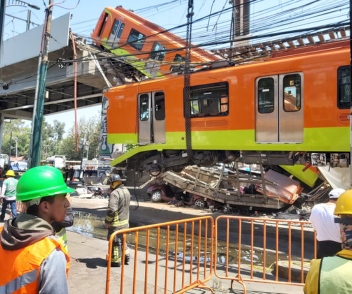
Photo: Government of Mexico City
The drive to sustainability and the implementation of net-zero policies or incentives are adding to the pressure on existing facilities, says Birgit Vosper, Global Practice Group Leader, General Liability and Construction Claims, at Allianz Commercial.
“The pace of change is sometimes faster than the roll-out of new infrastructure can keep up with,” Vosper says. “Legal requirements for the provision of parking spaces and charging facilities for EVs [electrical vehicles], for example, can present challenges. Where governments are encouraging the roll-out of EVs, there is often a gap between demand for charging facilities and their availability, as well as the electricity supply available from local grids. Upgrading or retrofitting buildings to allow for new cabling can be a complex undertaking, so it carries its own risks.”
The lithium-ion batteries in EVs are a known fire hazard, with a tendency to cause ‘thermal runaway’, a rapid self-heating fire that can cause an explosion and leak toxic fumes. As EVs become more prevalent, they could represent an increased fire risk in existing parking lots, particularly those in enclosed spaces.
Change of land use is also a rising concern as new low-carbon technologies are adopted more widely. “We need to be mindful of incidental risks and unintended consequences,” says Vosper. “Say someone installs ground-source heat pumps, or a factory lays new pipes to transport hot air from one building to heat another. But vibrations during installation disturb older piping nearby, causing costly damage. Unfortunately, not all existing systems show up on site plans.”
Rail travel will be an important part of the net-zero journey, requiring new routes, rolling stock, and, in urban areas, noise-canceling structures such as glass or concrete walls. These must withstand the speed of trains, but Vosper has seen claims where supply chain bottlenecks or skills shortages delayed railway infrastructure projects to such an extent that train technology advanced in the meantime. The existing noise-canceling structures were then damaged because they could not withstand the vibrations of newer, faster trains.
Climate change exerting pressure
Climate change is also bringing pressure to bear on the railways, says Vosper. “We are experiencing higher winds and more intense storms, heightening hazards such as trees falling on to tracks, or into the overhead wires and cables on electrified lines. If the maintenance of forested areas close to a railway line is neglected, it could have serious consequences in a storm. With increasing urbanization, more people and structures are now at risk from this kind of event.”
Vosper recalls an unusual climate-related claim from a client that produces glue for train windows. “The trains were traveling long distances between the Nordic region and southern Europe. With a greater disparity between the temperatures, the glue was no longer stable, so the windows became unsafe.”
Climate change is also thought to be intensifying wildfire risks, along with increasing urbanization and land use changes. The American utility giant Pacific Gas and Electric Company (PG&E) plans to bury 10,000 miles of powerlines in its highest fire-risk areas over the next decade, a process known as ‘undergrounding’, which can eliminate nearly 98% of the risk of wildfire ignition from electrical equipment. [7] PG&E filed for bankruptcy protection in 2019 after it faced more than $30bn in damages for a series of wildfires in California that were blamed on its equipment. [8]
“Measures such as undergrounding might not necessarily be a legal requirement, but they are an illustration of what a difference certain mitigation measures can make,” says Lauxmann. “Mitigation, monitoring and maintenance all require resources and investment. But unfortunately, the short-term economic interests of private companies sometimes act against the conservation of the assets they manage.”
Lauxmann points to the collapse of the Rana Plaza industrial building in Bangladesh in 2013 as an acute example of this. Warnings to evacuate the eight-story building after cracks were discovered went unheeded by garment factory owners. The building collapsed and killed 1,134 people.
The debate surrounding infrastructure and the required investments for this has been ramping up globally, Lauxmann notes. Certain countries are implementing major policies to address infrastructure issues, including President Biden’s $1trn infrastructure bill in the US. In South Korea, the 2020-2025 Master Plan is a nationwide policy of systematic maintenance and management of infrastructure and improvement of performance; China launched a nationwide drive in 2021 to retrofit ageing highway bridges to improve safety and durability; and Germany is retrofitting and modernizing its network of bridges, which consists of about 5,200 structures largely corresponding to the Trans-European Transport Network. [9] In September 2023 the German transport minister, Volker Wissing, announced an additional €40bn ($43bn) would be spent on the country’s railway network, saying, “The rail infrastructure has been neglected for decades and brought to its absolute limits.” [10]
Mitigating infrastructure failures
Arrieta believes that the ageing of infrastructure points to a future increase in claims and possible lawsuits against the parties involved in the asset, whether that’s designer, constructor, owner-operator, or maintenance company. Claims could be filed by a user who suffers material or personal damage caused by the poor state of the infrastructure, or by an owner who takes action against a company involved because of an error in the design or construction that led to the asset’s deterioration.
“We see a maintenance backlog in almost every country for infrastructure assets,” says Arrieta. “Often a problem only gets addressed if something happens, and then it might only get patched, but patching isn’t always adequate, either for long-term integrity or to comply with regulations.”
Excellent project management is the starting point for mitigating companies’ exposure to risk, according to Vosper. “Identifying the particular risks you face is a prerequisite, and this can be done with the support of Allianz Risk Consulting engineers, who can help you navigate the regulatory landscape, understand your duty of care, and make recommendations to improve the maintenance and management of assets.”
With complex projects involving multiple parties, there will be several interfaces where various contractors intersect. This calls for precise contractual language, Vosper cautions, particularly concerning handovers, which will require clearly defined timelines, obligations, and liabilities. You will also need a thorough understanding of your supply chain, which should include the competency and experience of the various parties involved and the quality of materials that will be used.
Lauxmann points to the march of technology as an increasingly important tool in monitoring and maintenance. “Infrastructure around the world might be ageing, but technological tools such as drones can now access hard-to-reach parts of assets to take high-res images and capture data for better-informed decision-making or reporting,” says Lauxmann. “The Tokyo Metropolitan Expressway, for example, has developed a special data collection vehicle equipped with a camera and laser scanner. This collects information for analysis by an Artificial Intelligence system that reviews the structures’ deformation over time.”
Lauxmann adds: “We know that infrastructure projects are immensely complex and face evolving challenges. Fortunately, major incidents concerning infrastructure are rare, but they are severity driven. So, if something does go wrong, there can be multiple parties involved, and severe losses can be incurred – not only in financial and reputational terms, but in the cost to human life. We are keen to maintain an ongoing risk dialogue between our clients and our risk engineers, so we can share knowledge about the evolution of liability exposures going forward, exchange technical know-how about potential solutions, and provide bespoke underwriting expertise.”
What kind of damages can be covered by liability insurance?
1. Property damage: such as when a poorly maintained cornice on a building detaches and damages a car
2. Bodily injury: for example, if the collapse of an asset causes fatalities
3. Financial loss: consequential financial losses as a result of the above.
This article is taken from the latest edition of Allianz Commercial's biannual client publication, Global Risk Dialogue, which features a number of insights on risk management and insurance topics around the world.
References
[1] ARTBA Bridge Report, August 18, 2023
[2] Allianz Commercial, Baltimore bridge collapse and shipping safety, April 2024
[3] El Mundo, The Prosecutor’s Office focuses on the state of the roads, March 10, 2022
[4] Reuters, Mexico City metro accident partly due to lack of maintenance, third audit finds, May 10, 2022
[5] France24, Beam, bolt flaws caused Mexico metro crash, probe finds, September 8, 2021
[6] El País, Carlos Slim’s company pays out thousands of dollars to Mexico City metro tragedy victims to prevent further lawsuits, February 2, 2022
[7] Underground Infrastructure, PG&E hits milestone with 600 miles of underground powerlines, reducing wildfire risk for 20 counties, December 22, 2023
[8] AP, Utility seeks bankruptcy protection over California fires, January 15, 2019
[9] OECD, Building Resilience: new strategies for strengthening infrastructure resilience and maintenance, November 8, 2021
[10] Euractive, Germany to give ailing railway company more money, September 15, 2023
Stage photo: Luca / Adobe Stock
Our experts



Birgit Vosper
Global Practice Group Leader, General Liability and Construction Claims
All the latest news, reports and hot topics







Sign up to the newsletter
Keep up to date on all news and insights from Allianz Commercial